Metal Stamping: Process Control, Precision and High-Volume Production
Introduction
Metal stamping is a core manufacturing process that transforms raw materials into functional components through controlled forming operations.
Achieving consistent quality in stamping requires a balance between press capacity, tooling performance, and process control.
How the Metal Stamping Process Works
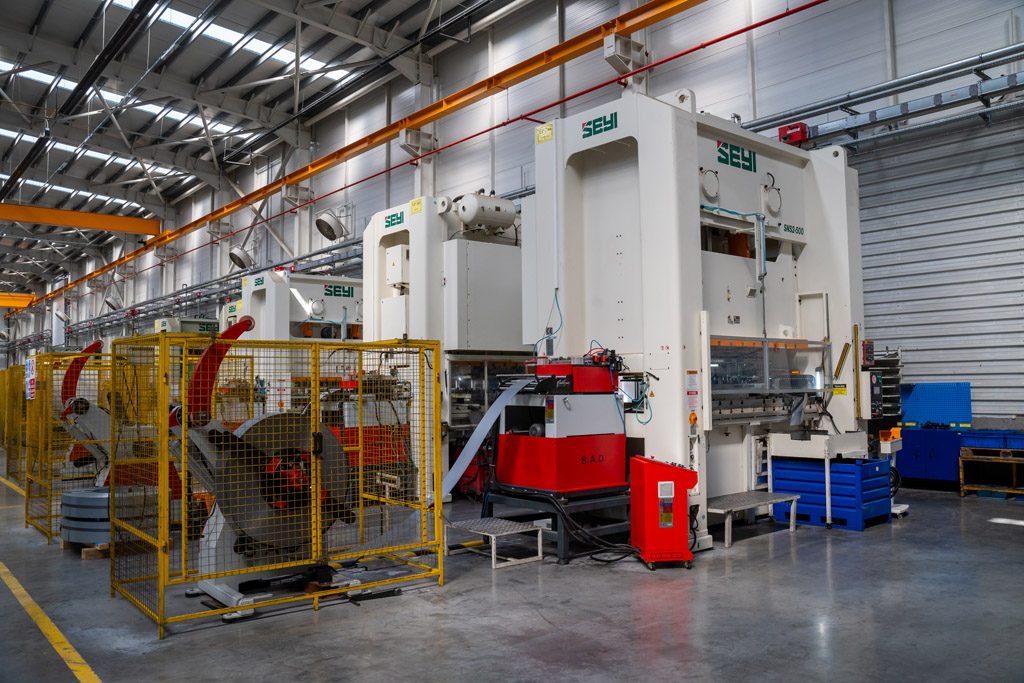
The stamping process begins with raw material input and continues through a controlled production setup.
Key parameters include:
- Press force
- Feed system accuracy
- Tool alignment and setup
Proper adjustment of these parameters ensures stable and repeatable production.
Maintaining Quality in High-Volume Production
In mass production, maintaining consistent quality is essential.
This is achieved through:
- In-process operator checks
- Regular press maintenance
- Well-maintained tooling systems
These measures support stable production and reduce variation.
Press Force and Part Quality
Press force must be carefully matched to:
- Material thickness
- Material hardness
- Part geometry
Incorrect press settings can lead to deformation, dimensional variation, or surface defects.
Key Considerations for Thin Sheet Metal Parts
Thin sheet metal components require higher process sensitivity.
Important factors include:
- Feed precision
- Increased inspection frequency
These help maintain part accuracy and prevent deformation.
Surface Quality in Stamping Processes
Surface quality is directly affected by:
- Tool condition
- Process stability
- Equipment performance
Unstable processes or tool wear can lead to surface defects and production interruptions.
Tolerance Management in Mass Production
Tolerance control begins with initial tool approval and continues throughout production.
The process includes:
- Monitoring production measurements
- Adjusting process parameters
- Maintaining inspection frequency
This ensures that parts remain within defined tolerances during continuous production.
Conclusion
Metal stamping requires precise control of process parameters and equipment.
A structured approach supports consistent part quality, efficient production, and reliable performance in high-volume manufacturing.
🔗 Explore More
This topic is part of our integrated manufacturing capabilities.