Washing Machine Hinges: Design Considerations for Integrated Appliance Applications
In modern appliance design, hinge systems are expected to perform reliably under a combination of mechanical load, repeated use, and environmental exposure. This is particularly relevant for washing machine hinges, where integration with furniture systems and operation in humid conditions introduce additional design considerations.
For OEM manufacturers, hinge selection is not only related to motion control but also to long-term durability, corrosion resistance, and integration compatibility.
The Role of Hinges in Built-In Washing Machine Design
In built-in washing machines, hinges are typically used to connect the appliance door to external furniture panels. This creates a combined system where the hinge must support:
- The weight of both appliance and furniture doors
- Controlled opening and closing behavior
- Stable positioning during operation
- Alignment with cabinet systems
Unlike standalone appliances, integrated systems require hinge solutions that are designed to work as part of a multi-component structure rather than a single door mechanism.
Key Design Considerations for Washing Machine Hinges
Load and Structural Stability
Washing machine hinges are generally designed to handle higher loads compared to standard appliance hinges. Typical applications may involve:
- Door weights ranging from approximately 1.5 to 12 kg
- Additional load from attached furniture panels
This makes structural rigidity and load distribution important design factors.
Controlled Motion and User Interaction
A hinge system is typically expected to provide:
- Smooth and controlled opening
- Resistance to sudden or uncontrolled movement
- Stable positioning in defined angles
Spring-based mechanisms are commonly used to support controlled motion and improve user experience during repeated use.
Corrosion Resistance in Humid Environments
Washing machines operate in environments where humidity and moisture are consistently present.
For this reason, hinge systems are often developed with:
- Corrosion-resistant coatings
- Material combinations suitable for humid conditions
- Surface treatments to improve long-term durability
These factors contribute to maintaining consistent performance over time.
Material and Mechanical Architecture
The design of a washing machine hinge typically involves a combination of materials selected for both strength and durability.
Common configurations may include:
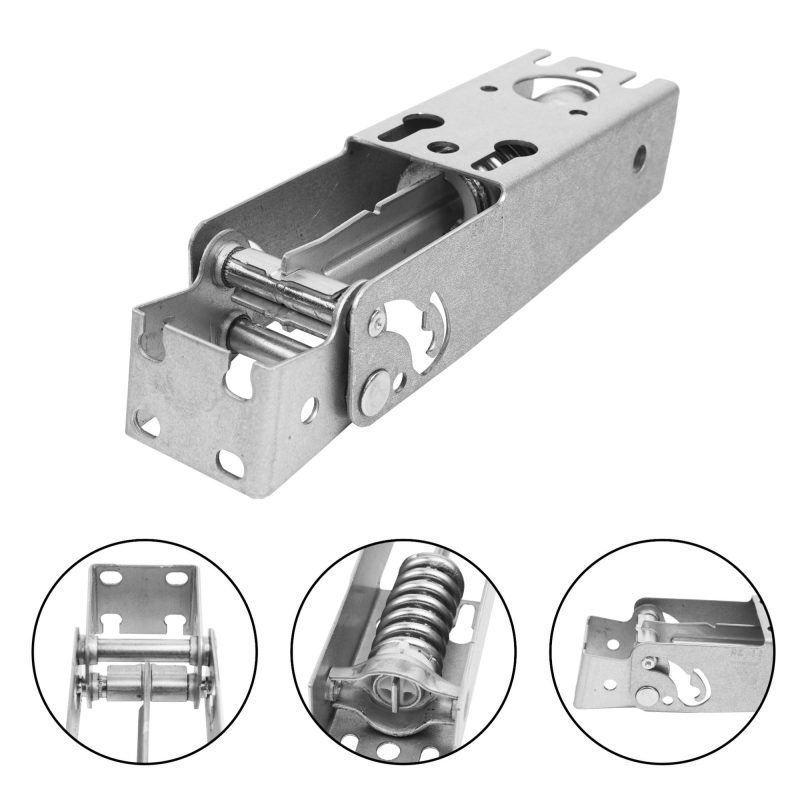
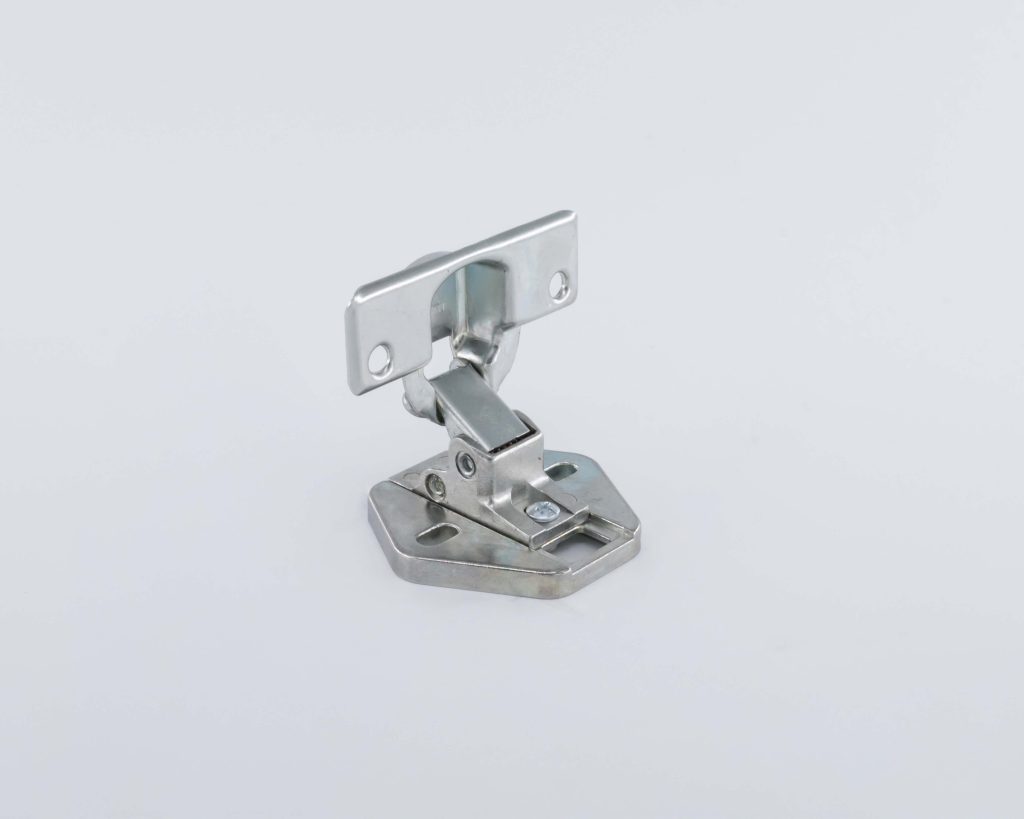
- Sheet metal structures for load-bearing capacity
- Zamak or cast components for dimensional stability
- Spring steel elements for motion control
This combination allows the hinge to maintain structural integrity while supporting repeated mechanical cycles.
In many designs, traditional mechanical principles are combined with modern manufacturing techniques to achieve a balance between reliability and production efficiency.
Performance Under Repeated Use
Hinges in washing machines are subject to frequent daily use. Over time, this results in:
- Cyclic mechanical stress
- Wear at contact surfaces
- Potential misalignment if not properly designed
Typical performance expectations may include:
- Cycle durability in the range of 10,000+ operations
- Stable torque characteristics over time
- Consistent alignment with cabinet systems
Maintaining these characteristics is generally considered important for overall appliance reliability.
Integration with Furniture Systems
One of the distinguishing aspects of washing machine hinges is their role in furniture integration.
In built-in applications, hinges must:
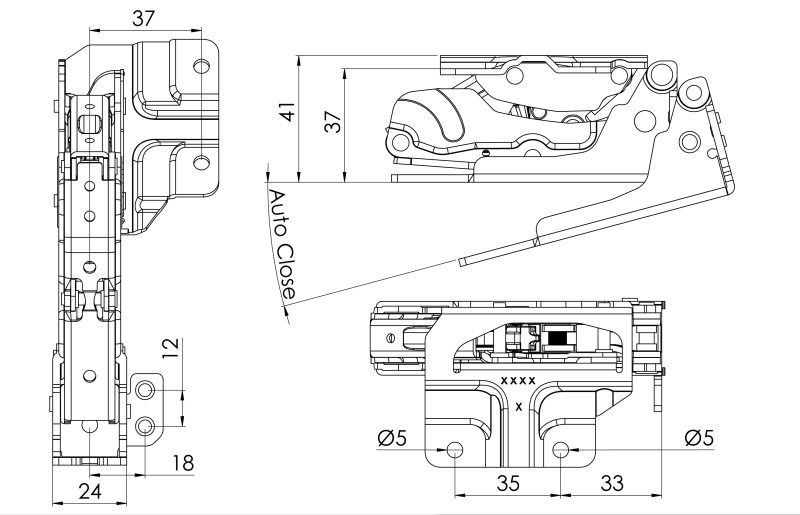
- Align with cabinet door geometry
- Support synchronized movement between appliance and furniture door
- Maintain consistent gaps and positioning
This makes dimensional accuracy and repeatability important factors during both design and production stages.
Considerations When Selecting a Hinge Solution
For OEM manufacturers, selecting a hinge system typically involves evaluating several factors:
- Compatibility with appliance and furniture design
- Performance under load and environmental conditions
- Ease of assembly and installation
- Long-term durability under repeated use
Rather than focusing solely on nominal specifications, real-life performance and integration behavior are often key considerations.
Final Remarks
Washing machine hinges are not standalone components; they function as part of a larger integrated system involving mechanical, structural, and environmental factors.
For OEM applications, the objective is typically to support:
- Stable and controlled door movement
- Long-term durability in humid environments
- Reliable integration with furniture systems
These outcomes are generally achieved through a combination of material selection, mechanical design, and application-specific validation.