Top Cover Hinges for Appliances: Design Considerations for OEM Applications
In appliance design, hinge systems are often evaluated based on reliability, integration, and long-term performance rather than visibility. Among these components, top cover hinges play an important role in defining user interaction, motion control, and perceived product quality.
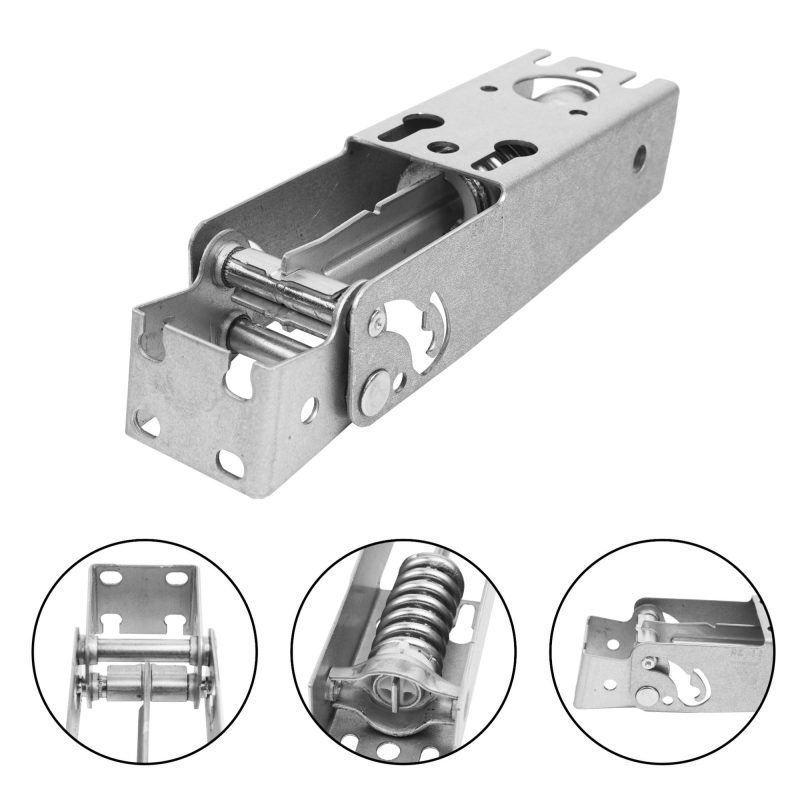
Top cover hinge systems are commonly used in ovens and small appliances where controlled lid movement, structural stability, and consistent operation are expected over repeated use.
The Role of Top Cover Hinges in Appliance Design
From an OEM standpoint, a hinge is not only a mechanical connector but also part of the overall motion control system.
A typical top cover hinge is intended to:
- Support controlled opening and closing movement
- Maintain stable positioning during operation
- Contribute to user comfort and safety
- Operate under repeated cycles and thermal exposure
In glass top cover applications, hinge systems are often designed to provide smooth and stable motion without requiring complex mechanical balancing systems.
Design Considerations for Compact Integration
Modern appliance designs require components that can perform reliably within limited installation space. This makes compact hinge architecture an important design parameter.
Compact Structure
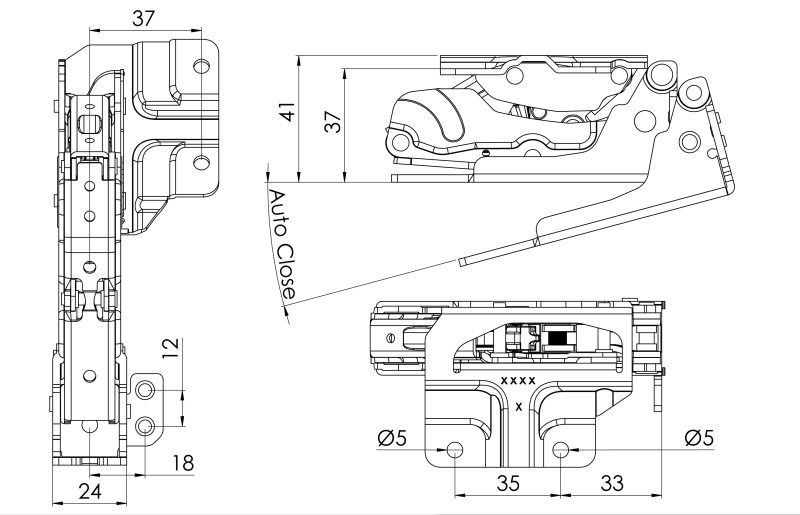
Top cover hinges are typically developed to integrate into narrow mounting areas without affecting structural integrity.
Balanced Mechanical Design
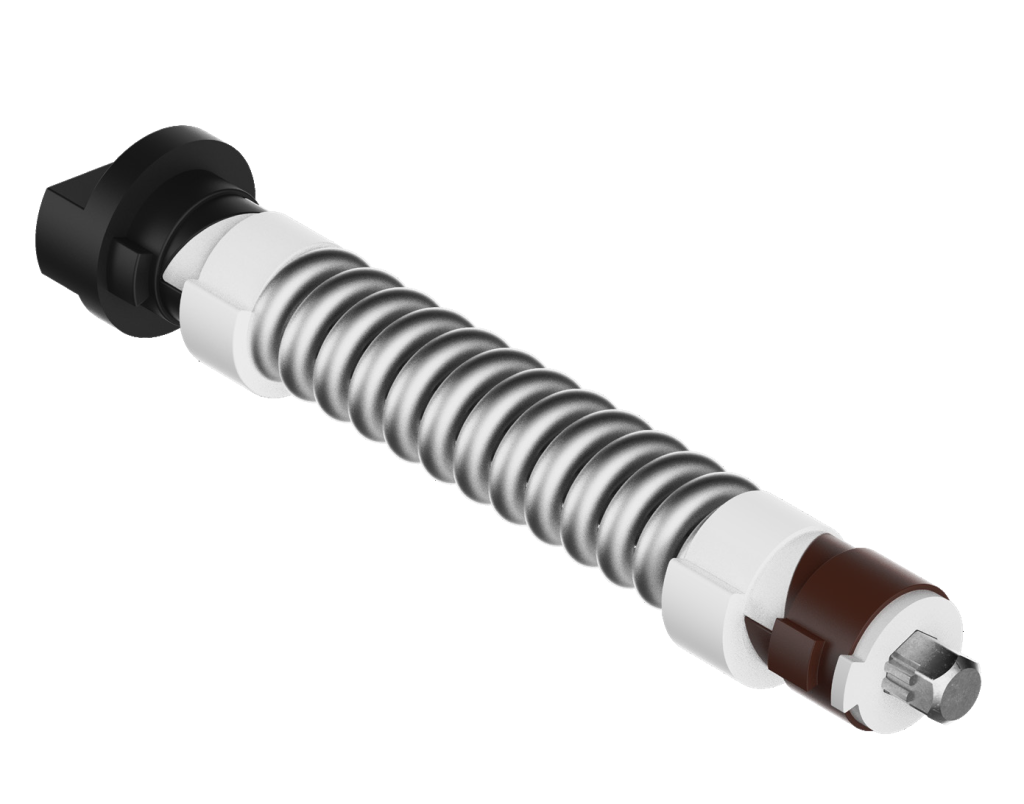
A balanced mechanism with optimized spring geometry is generally used to support:
- Controlled lid movement
- Stable positioning
- Reduced mechanical stress
Material Pairing for Motion Quality
In some applications, combinations such as:
- Metal structural elements
- Polymer (e.g., POM) sliding surfaces
are used to reduce friction and support smoother motion characteristics.
Performance Under Thermal and Mechanical Conditions
In appliance environments, hinge systems are exposed to:
- Elevated temperatures
- Repeated opening and closing cycles
- Long-term mechanical loads
Typical performance ranges observed in such applications include:
- Load capacity: approximately 1.5 – 6 kg
- Operating temperature: up to 115°C
- Cycle durability: 10,000+ cycles
Under these conditions, maintaining consistent motion characteristics over time is generally considered a key performance factor.
Material and Structural Approach
Material selection and structural design are closely linked in hinge development.
Common approaches may include:
- Zamak or stamped metal bodies for rigidity and cost balance
- Spring steel components for force generation
- Reinforced geometries for stress distribution
In some designs, simplified mechanical architectures are preferred, particularly in cost-sensitive applications where functional stability and manufacturability are prioritized.
Application Areas
Top cover hinges are used in a range of appliance and equipment categories:
Domestic Appliances
- Glass top covers in built-in ovens
- Compact cooking appliances
- Microwave and small appliance lids
Commercial Equipment
- Professional kitchen systems requiring frequent usage
Industrial Applications
- Access covers and service lids
Across these applications, hinge systems are generally expected to provide stable positioning and predictable movement over time.
Design Variations Based on Application Needs
Different applications may require different hinge characteristics.
For example:
- Some designs focus on smooth and quiet motion
- Others prioritize cost efficiency and structural simplicity
- In oven applications, thermal resistance and stability may be more critical
This leads to variations such as:
- Spring-optimized hinge systems for motion control
- Simplified hinge designs for cost-focused products
- Reinforced structures for high-temperature environments
Considerations When Selecting a Hinge Supplier
When evaluating an appliance hinge manufacturer, OEMs typically consider multiple factors:
- Consistency of motion over product lifetime
- Behavior under thermal conditions
- Compatibility with product design constraints
- Ease of integration into assembly processes
Rather than focusing only on nominal specifications, real-world performance and repeatability are often key evaluation criteria.
Final Remarks
Top cover hinges are small components, but they are often an important contributing factor in product usability and durability.
For OEM applications, the objective is typically to support:
- Controlled and stable lid movement
- Long service life
- Compatibility with compact and cost-optimized designs
These outcomes are generally achieved through a combination of material selection, mechanical design, and application-specific validation.