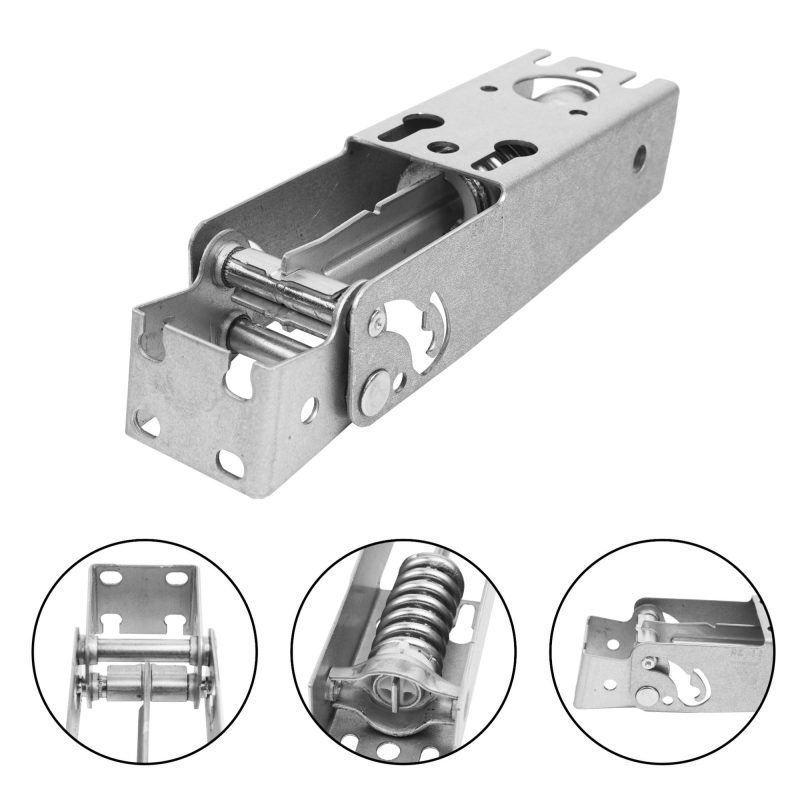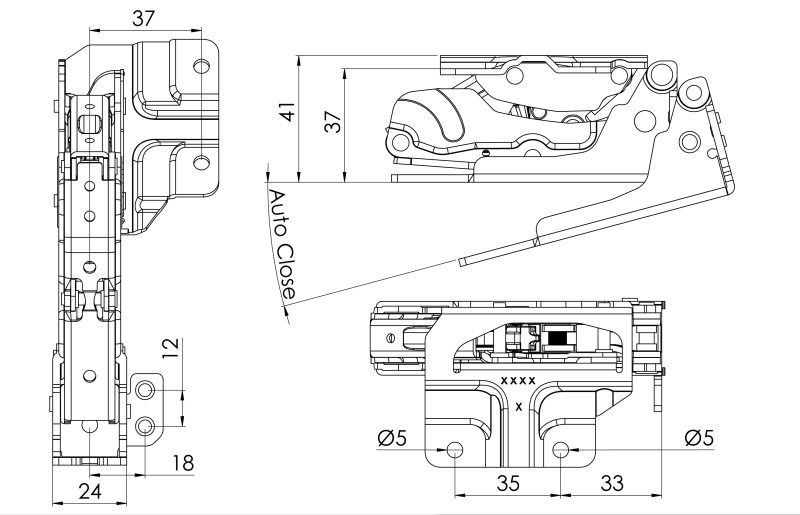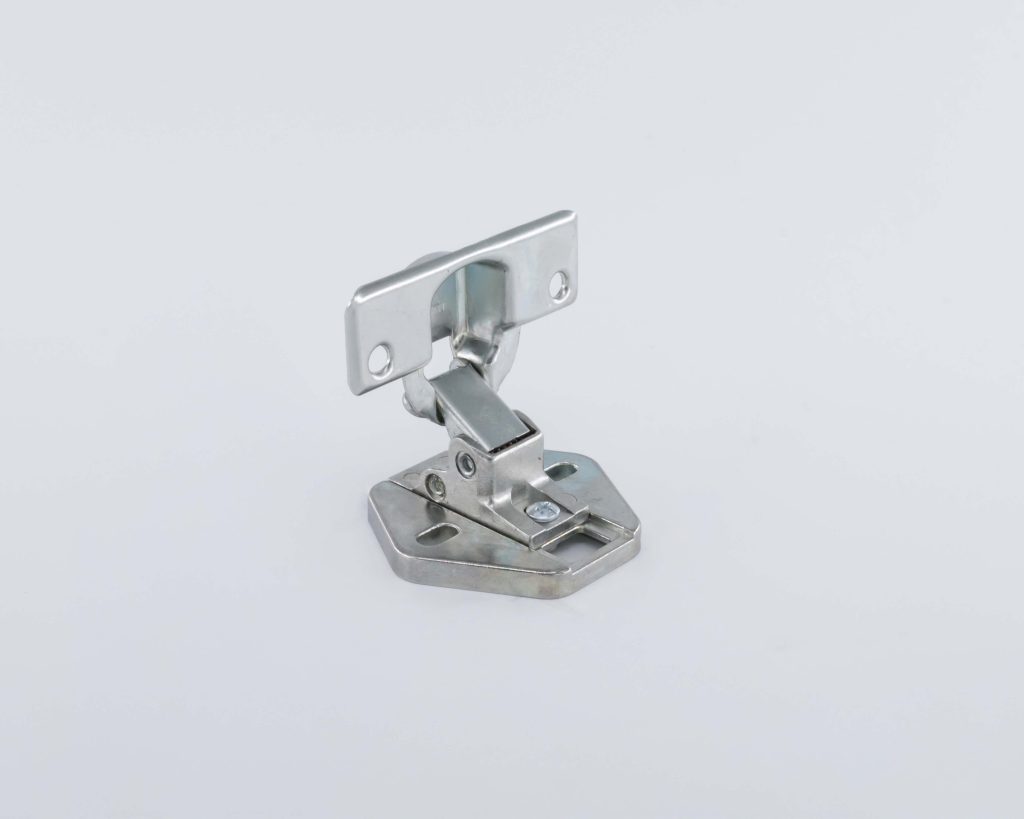
Built-In Washing Machine Hinges: Engineering Reliable Motion for Integrated Appliance Designs
Introduction
As modern kitchens and laundry rooms increasingly adopt seamless built-in appliance designs, hinge systems have become important engineering components rather than simple hardware accessories. Among these components, built-in washing machine hinges play a significant role in supporting both functionality and user experience.
Unlike conventional appliance hinges, built-in washing machine hinges must accommodate not only the movement of the appliance door itself but also the additional loads created by integrated furniture panels. At the same time, they operate in environments exposed to vibration, humidity, repeated use, and demanding alignment requirements.
For OEM manufacturers, selecting an appropriate hinge system can influence product durability, operational consistency, and overall user satisfaction.
What Is a Built-In Washing Machine Hinge?
A built-in washing machine hinge is a specialized hinge system designed to synchronize the movement of a washing machine door with an external furniture door.
The hinge allows the appliance to integrate visually with surrounding cabinetry while supporting controlled door operation and structural stability. Compared with standard hinge applications, these systems often accommodate additional door mass and may require tighter alignment tolerances throughout their operating life.
Why Built-In Applications Present Unique Engineering Challenges
Integrated appliance designs introduce mechanical considerations that differ from those found in freestanding appliances.
These considerations may include:
- Additional furniture door weight
- Increased operating forces
- Larger bending moments
- Tight alignment requirements
- Repeated dynamic loading
- Continuous vibration exposure
As a result, hinge systems are typically designed with both structural strength and motion control in mind.
The Importance of Controlled Door Movement
One of the primary functions of a built-in washing machine hinge is supporting controlled door movement.
Without appropriate motion control, heavier furniture doors may create higher operating forces or less predictable movement characteristics. Depending on the application, this can influence user perception, operating comfort, and overall product quality.
Many integrated hinge systems incorporate spring-assisted mechanisms intended to support:
- Balanced movement
- Reduced closing impact
- Improved operating comfort
- Consistent movement characteristics
- Long-term mechanical stability
Controlled movement may also help reduce stress on adjacent furniture components and mounting interfaces.
Vibration and Fatigue Considerations
Washing machines operate in a vibration-intensive environment compared with many other household appliances.
During spin cycles, vibration is transmitted throughout the appliance structure and can reach hinge assemblies. Over time, hinge components may be exposed to millions of small vibration cycles in addition to normal door opening and closing operations.
To address these conditions, engineers often evaluate factors such as:
- Fatigue-resistant geometries
- Controlled pivot clearances
- Spring material selection
- Mounting interface design
- Wear characteristics of moving components
These considerations may contribute to maintaining consistent hinge performance throughout extended service periods.
Material Selection and Structural Design
Material selection can significantly influence hinge performance and durability.
Many modern built-in washing machine hinges utilize hybrid constructions that combine the advantages of multiple materials.
Precision-Stamped Steel Components
Steel components are commonly selected for their:
- Structural strength
- Fatigue resistance
- Load-carrying capability
- Manufacturing consistency
Die-Cast Zamak Components
Zamak components may offer:
- Dimensional accuracy
- Complex geometry capability
- Stable mounting interfaces
- Efficient production characteristics
By combining these materials, manufacturers can balance durability, dimensional stability, and production requirements.
Corrosion Resistance in Humid Environments
Built-in washing machine hinges frequently operate in environments exposed to:
- Moisture
- Condensation
- Detergent residue
- Cleaning chemicals
For this reason, corrosion resistance is often an important consideration during hinge development.
Engineers may evaluate:
- Surface coating systems
- Material compatibility
- Corrosion testing performance
- Water drainage characteristics
- Long-term appearance retention
Appropriate material selection and surface treatment strategies may help support long-term performance in humid operating environments.
Furniture Integration Requirements
Unlike many traditional appliance hinges, built-in washing machine hinges must function as part of a larger furniture integration system.
This may require attention to:
- Door alignment
- Mounting accuracy
- Furniture compatibility
- Motion synchronization
- Assembly efficiency
Careful consideration of these factors can help support consistent operation throughout the appliance lifecycle.
Key Specifications OEM Engineers Commonly Evaluate
When specifying a built-in washing machine hinge, manufacturers typically consider a range of performance criteria beyond basic load capacity.
Examples include:
- Door weight capacity
- Center-of-gravity distance
- Opening angle
- Cycle-life performance
- Operating temperature range
- Corrosion resistance
- Motion-control characteristics
- Furniture integration compatibility
- Structural stability under load
The relative importance of each parameter may vary depending on appliance architecture and project requirements.
Selecting the Right Built-In Washing Machine Hinge
The most appropriate hinge solution depends on factors such as appliance design, furniture configuration, operating environment, and expected usage conditions.
During product development, manufacturers often seek a balance between:
- Durability
- Motion control
- User comfort
- Corrosion resistance
- Ease of integration
- Manufacturing efficiency
Evaluating these factors early in the design process may help support successful product integration and long-term operational consistency.
Conclusion
Built-in washing machine hinges are important components in modern integrated appliance designs. Their performance can influence door operation, structural stability, user experience, and overall product functionality.
As appliance manufacturers continue to develop increasingly integrated solutions, hinge systems remain a key engineering consideration. Selecting a hinge that incorporates considerations such as controlled motion, fatigue resistance, corrosion protection, and furniture compatibility may help support durability, operational consistency, and long-term product performance.